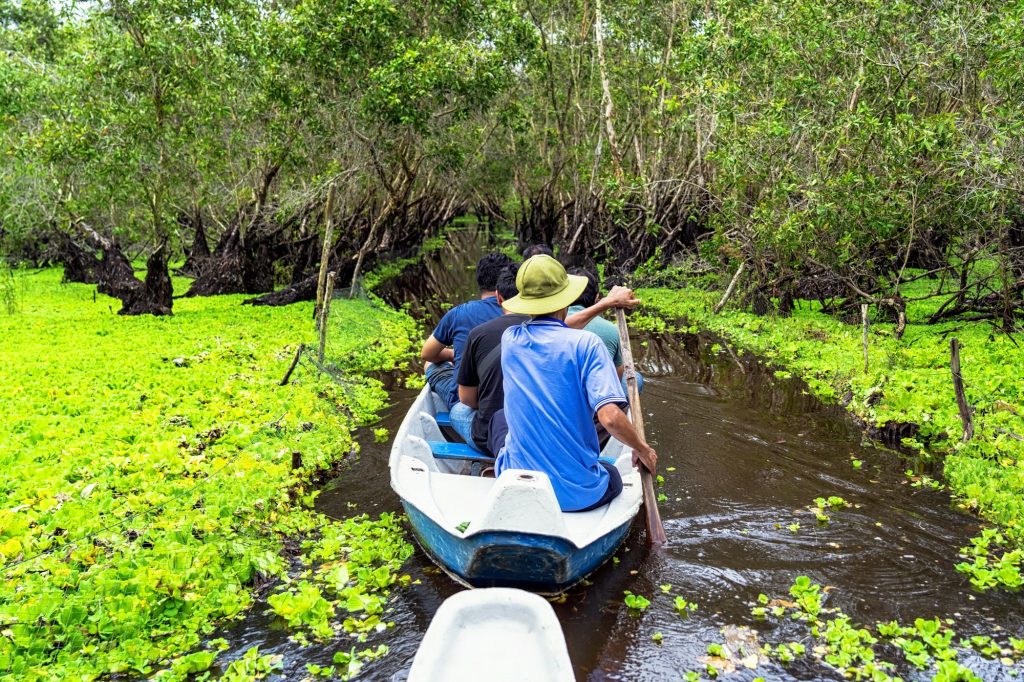


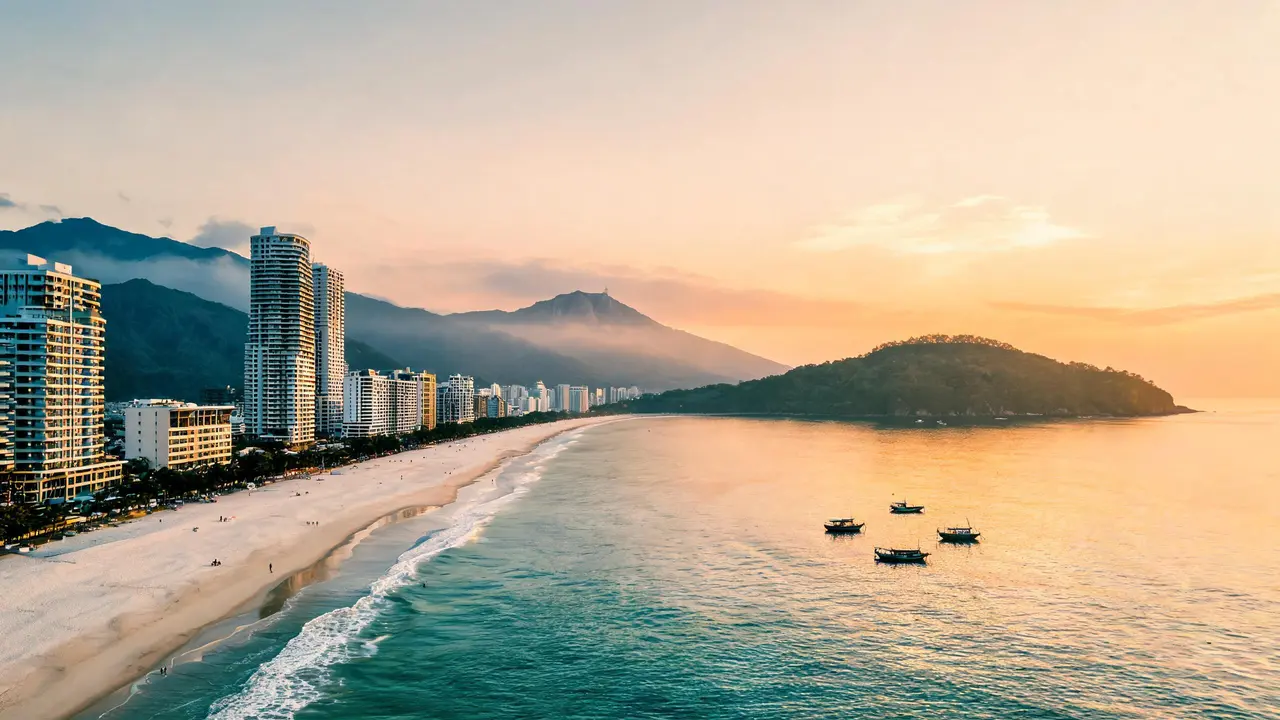
Picture this: a pristine coastline with 30 kilometers of sandy beaches, a dragon-shaped bridge breathing fire on weekend nights, bowls of turmeric noodles so good they earned Michelin recognition, and a skyline where ancient marble mountains meet five-star resorts. This is Da Nang, Vietnam’s most dynamic coastal city, and it is about to become your next favorite destination.
Da Nang sits in the heart of Central Vietnam, sandwiched between three UNESCO World Heritage sites - Hoi An Ancient Town, Hue Imperial City, and My Son Sanctuary. In 2025, the city welcomed over 17 million visitors, and 2026 is on track to smash that record with 19 million expected. But despite the numbers, Da Nang has retained its laid-back charm. It offers the beaches of Bali at half the price, the safety of Singapore coupled with Vietnamese warmth, and a food scene that rivals anything in Southeast Asia.
Whether you are a first-time visitor planning a 3-day escape, a digital nomad looking for your next base, or a family traveling with kids, this Da Nang travel guide covers everything you need to know.
Quick Summary:
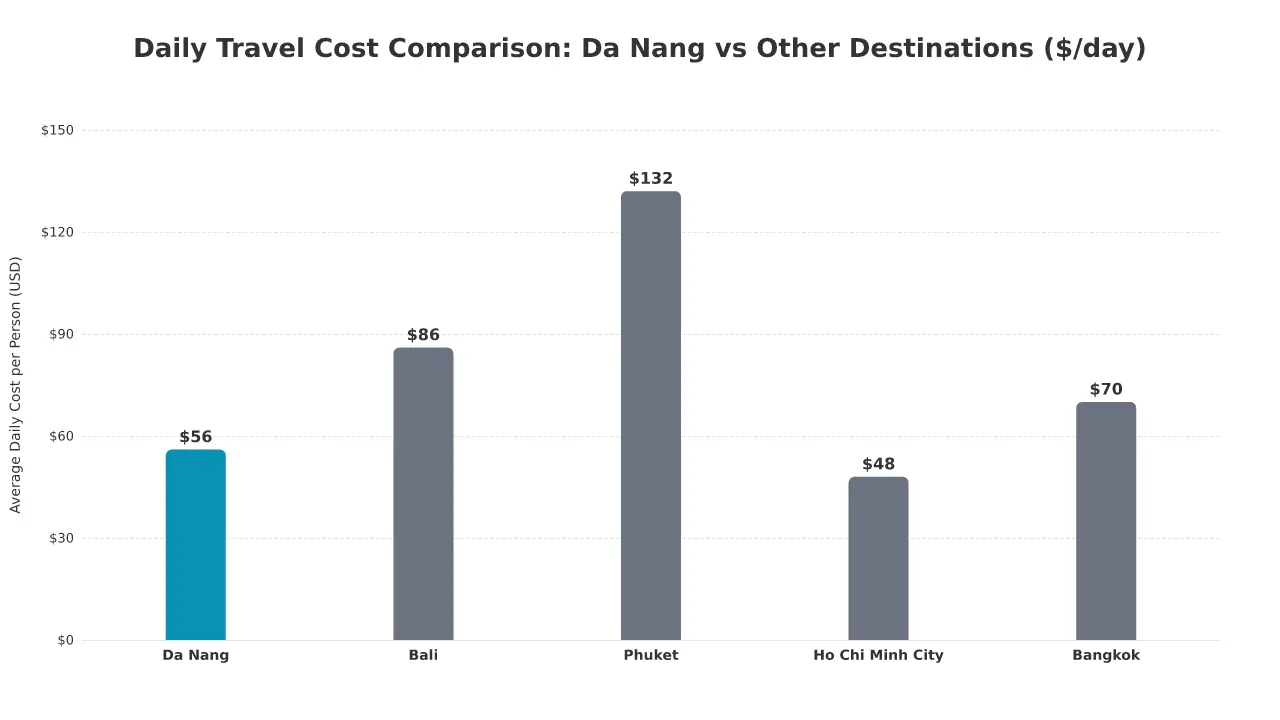
- Da Nang costs an average of $56 per day per person, making it 53% cheaper than Bali and 136% cheaper than Phuket for a comparable experience
- The best time to visit is February through May when temperatures average 20-28°C with minimal rain and comfortable humidity
- Must-visit attractions include My Khe Beach, Ba Na Hills with the Golden Bridge, Marble Mountains, and Son Tra Peninsula home to the red-shanked douc langur
- A bowl of Mi Quang, the city’s signature dish, costs just $1.20 at local stalls while Michelin-recognized restaurants offer fine dining from $60 per person
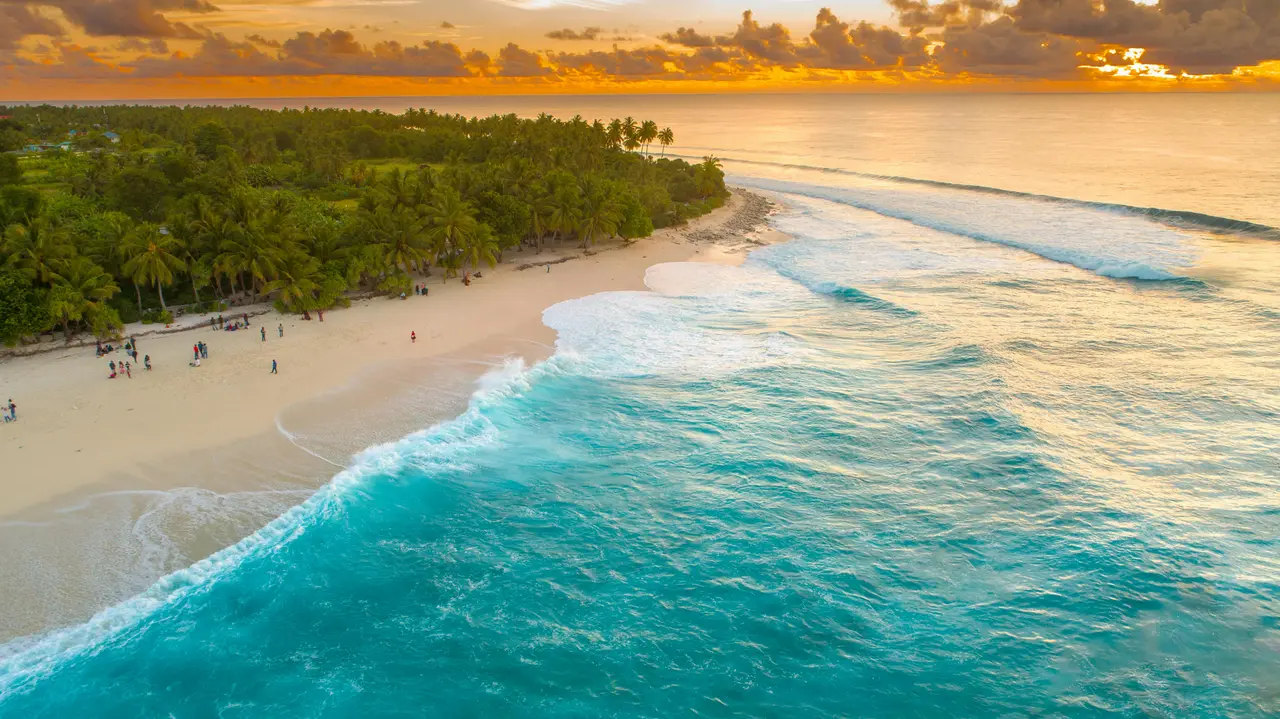
Why Visit Da Nang? 3 Compelling Reasons
Unbeatable Value for Money
Da Nang offers arguably the best value of any beach destination in Asia. The average daily cost per person is $56, compared to $86 in Bali and $132 in Phuket. A family of four spending a week in Da Nang saves approximately $530 to $2,100 compared to Phuket, and $210 to $840 compared to Bali. Your dollar goes dramatically further here, especially on accommodation, street food, and transportation.
Safety and Accessibility
Da Nang scores 88 out of 100 on safety indexes, significantly higher than Phuket at 74 or Bali at approximately 75. Violent crime against tourists is virtually non-existent, bag snatching is extremely rare compared to Ho Chi Minh City, and the city is well-lit and walkable along the Han River and beachfront. Da Nang International Airport is a Skytrax 5-star terminal with direct flights from over 20 international destinations, including Seoul, Tokyo, Singapore, Kuala Lumpur, Bangkok, and Hong Kong.
The Best of Both Worlds
Da Nang uniquely blends nature and urban sophistication. You can spend the morning hiking through marble caves at Marble Mountains, the afternoon lounging on Forbes-listed My Khe Beach, and the evening sipping cocktails at a rooftop bar overlooking the Dragon Bridge. It is a city where backpackers eating $1.20 Mi Quang at a street stall and luxury travelers dining at a Michelin-starred restaurant are often within 500 meters of each other.
Best Time to Visit Da Nang
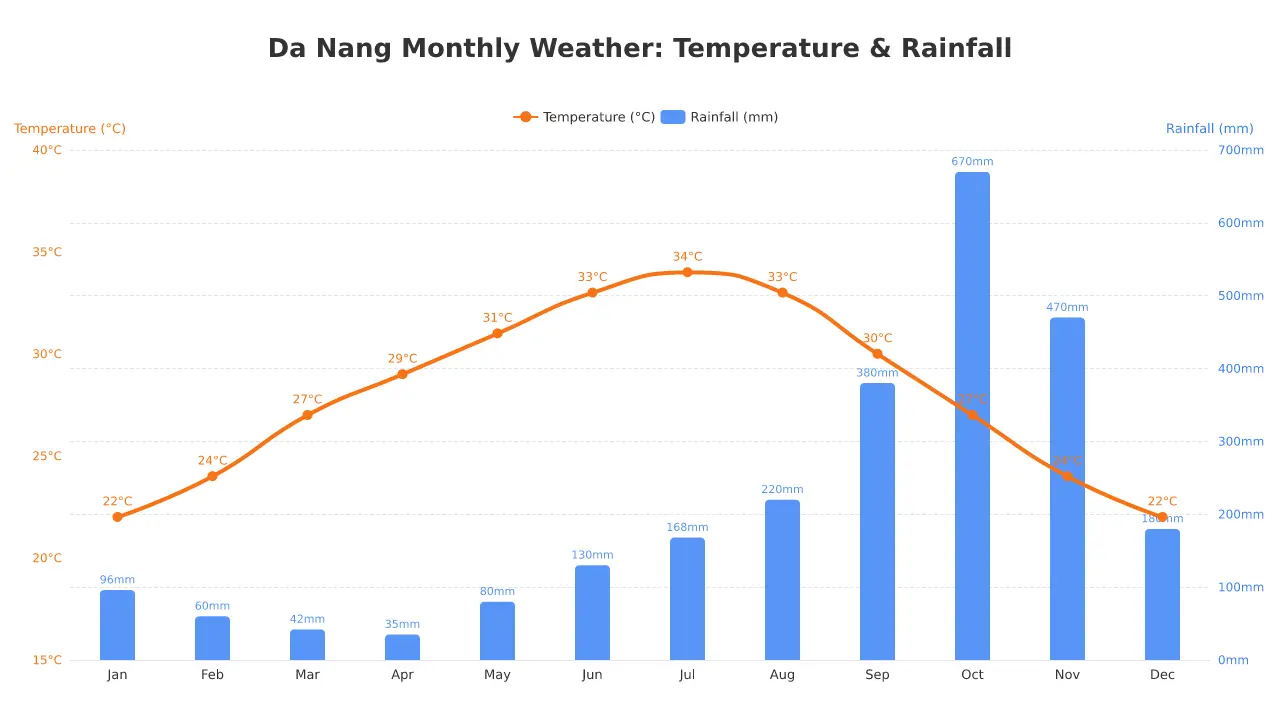
Da Nang has a tropical monsoon climate with two distinct seasons. Choosing the right time can make or break your trip.
Month-by-Month Weather Breakdown
| Months | Season | Temperature | Rainfall | Crowds | Best For |
|---|---|---|---|---|---|
| February - May | Dry (Peak) | 20-28°C | Low | Moderate | Sightseeing, outdoor activities |
| June - August | Dry (Hot) | 28-35°C | Low | High | Beach, water sports |
| September - December | Rainy | 20-28°C | High (peak Oct-Nov) | Low | Budget travel, fewer tourists |
| January | Transition | 18-25°C | Moderate | Moderate | Pleasant weather, quiet beaches |
Best Overall: February to May
This is the sweet spot. The weather is warm but not scorching, rain is minimal, and the crowds are manageable. March and April offer the most comfortable conditions for exploring the city, hiking Son Tra Peninsula, and visiting Ba Na Hills. March also brings the Quan The Am Festival at Marble Mountains, a major Buddhist celebration with lantern releases and folk performances.
Best for Beach Lovers: June to August
If your priority is swimming, sunbathing, and water sports, the peak summer months deliver. Temperatures can hit 35°C, but the sea breeze along My Khe Beach keeps things bearable. This is also when the Da Nang International Fireworks Festival (DIFF) takes place. In 2026, DIFF runs from May 30 to July 11 with 10 teams from 9 countries competing along the Han River.
Best for Budget Travelers: September to November
Rain is frequent, especially in October, but hotel prices drop by 30-50% and attractions are empty. Pack a raincoat and flexible itinerary. The upside is having My Khe Beach almost to yourself between showers.
Festival and Events Calendar 2026
Da Nang International Fireworks Festival (DIFF 2026) runs from May 30 to July 11 with competition nights every Saturday. Theme: “United Horizons.” Free viewing from Bach Dang Street, APEC Park, and the Dragon Bridge area. The Da Nang Asian Film Festival (DANAFF IV) follows from June 28 to July 4. Year-round, Phoenix Drone Shows light up the sky over the Han River.
How to Get to Da Nang
By Air
Da Nang International Airport (DAD) is located just 3 kilometers from the city center. The T2 terminal holds a Skytrax 5-star rating, a distinction it has maintained since 2024. Direct flights connect Da Nang to Seoul (3 hours), Tokyo (4 hours), Singapore (2.5 hours), Kuala Lumpur, Bangkok, Hong Kong, and increasingly to European cities via Asian hubs. Domestic flights from Hanoi and Ho Chi Minh City take approximately 1.5 hours with round-trip fares from $35 to $85.
By Train
The Reunification Express runs along Vietnam’s stunning north-south coastline and stops at Da Nang Station. The train from Hanoi takes about 15 hours in a soft sleeper ($25-$50 one way). From Ho Chi Minh City, expect 17-20 hours. While slower than flying, the train offers spectacular views of Hai Van Pass and Lang Co Beach.
By Bus or Private Car
Sleeper buses connect Da Nang with Hanoi, Ho Chi Minh City, and all major Central Vietnam destinations. For travelers combining Da Nang with Hoi An (30 kilometers, 45 minutes), a private transfer costs $12 to $20 via GrabCar or pre-arranged car service.
Getting Around Da Nang
Getting around Da Nang is straightforward and affordable.
Grab: The Easiest Option
Download the Grab app before arrival. GrabBike starts at 5,000 VND base fare plus 3,500-4,500 VND per kilometer (approximately $0.15-$0.18 per km). GrabCar starts at 25,000 VND base plus 11,000-13,000 VND per kilometer. Both are reliable, trackable, and eliminate haggling.
Motorbike Rental
Renting a motorbike costs 100,000-150,000 VND per day ($4-$6). You need an International Driving Permit and should wear a helmet at all times. Traffic in Da Nang is significantly calmer than in Hanoi or Ho Chi Minh City, making it a great city to ride. The coastal road to Hoi An and the winding roads of Son Tra Peninsula are particularly rewarding on two wheels.
Xanh SM Electric Taxis
Xanh SM is Vietnam’s electric taxi service, typically 5-10% cheaper than Grab. They are a greener alternative and increasingly popular.
Traditional Taxis
If you must use a traditional taxi, stick to reputable companies like Mai Linh (green), Tien Sa, or Vinasun. Expect 12,000-15,000 VND per kilometer. Avoid unmarked cabs and always insist on the meter.
Public Bus
Bus route 12 connects the airport to the beach for just 20,000 VND ($0.80). It is perfectly safe and the most budget-friendly option.
Top Attractions in Da Nang
My Khe Beach
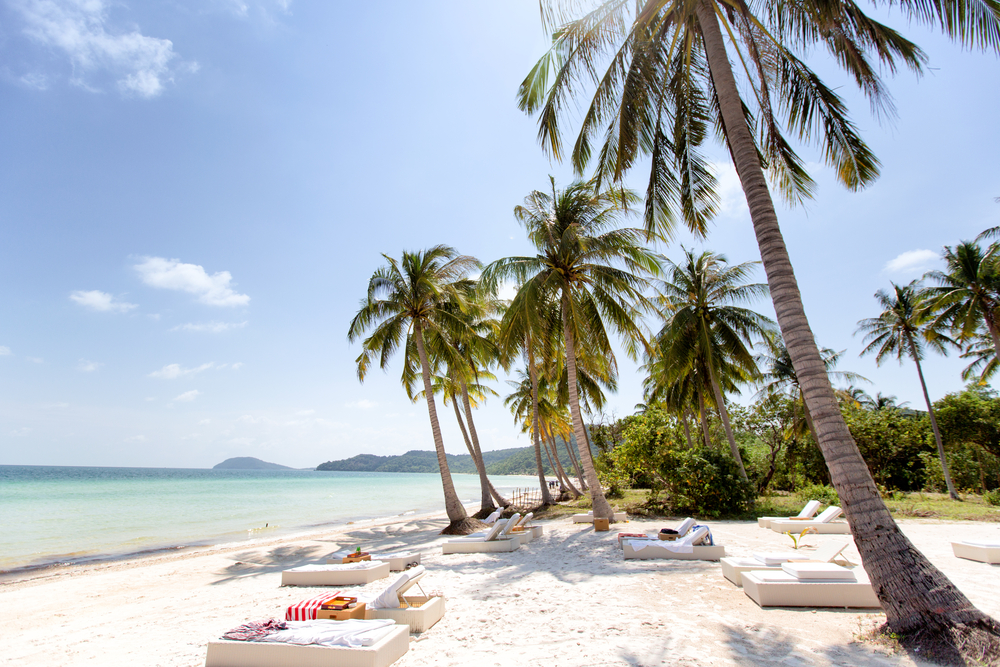
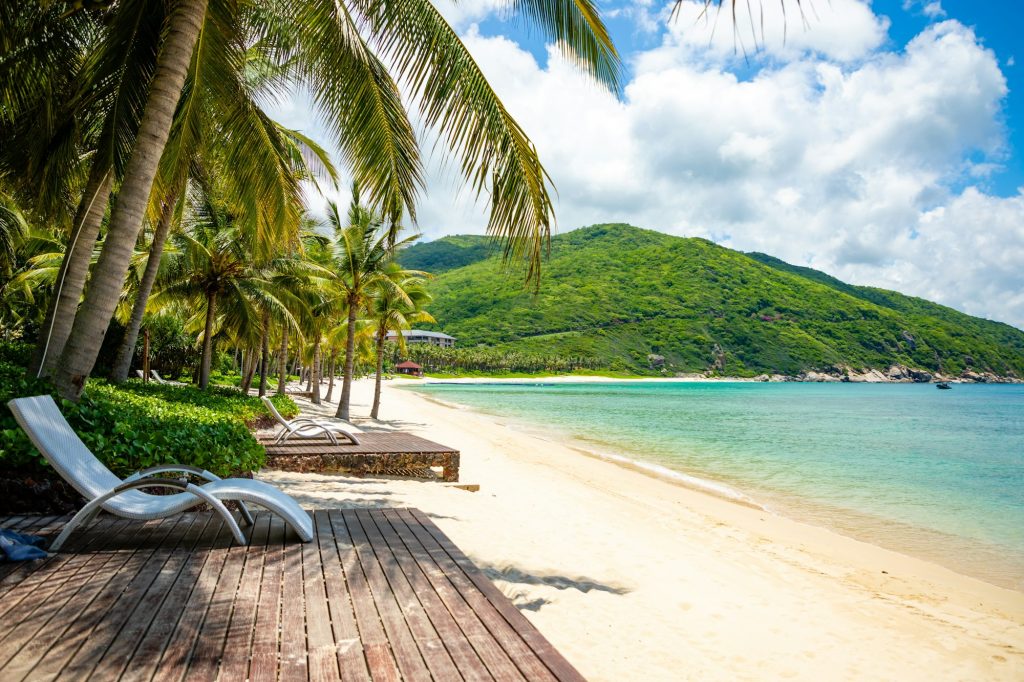
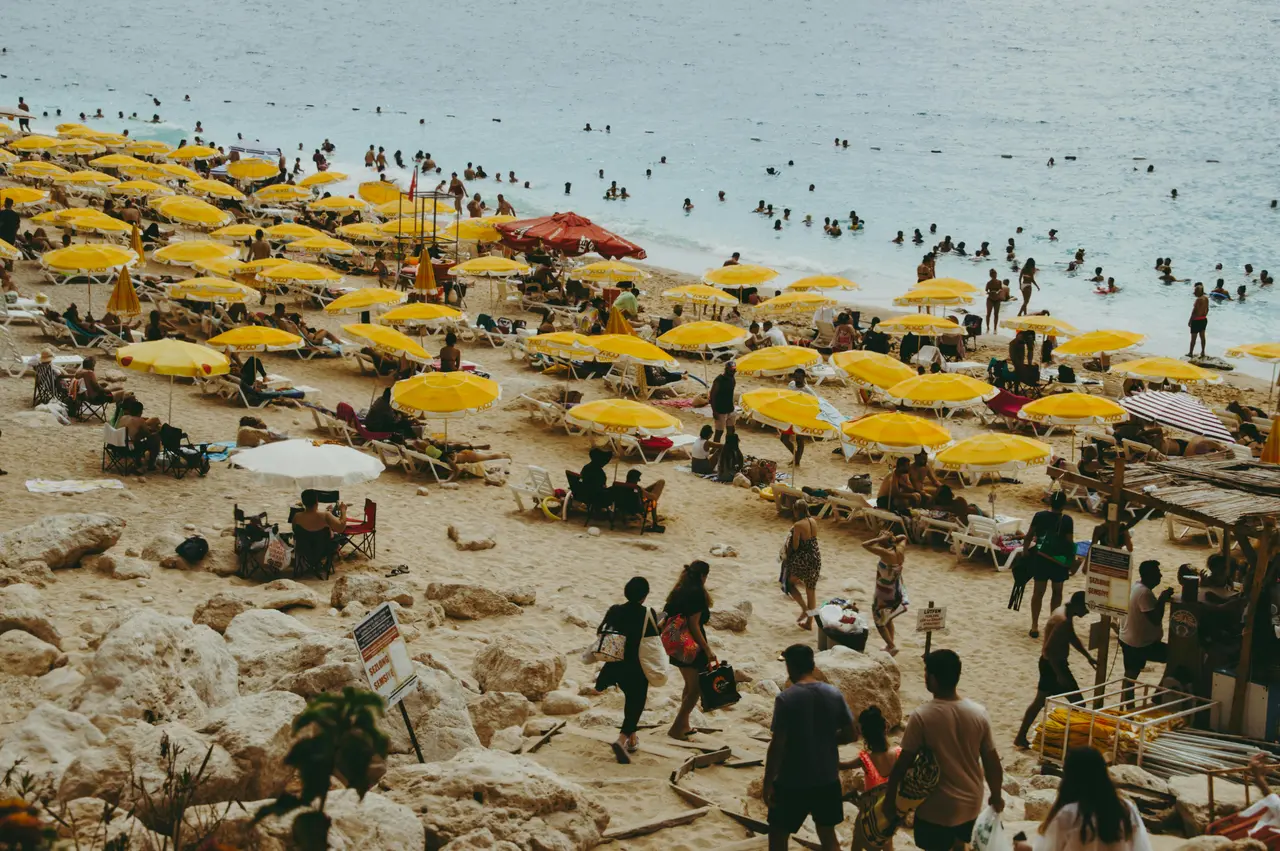
Forbes magazine named My Khe Beach one of the most beautiful beaches on the planet. Stretching 20 kilometers along Vo Nguyen Giap Street, it offers soft white sand, gentle waves, and a backdrop of the Son Tra Mountains. Entry is free, sun loungers cost approximately $2, and lifeguards patrol designated swimming zones. Visit at sunrise (5:30-6:30 AM) to see locals practicing tai chi and jogging along the promenade.
Ba Na Hills and the Golden Bridge
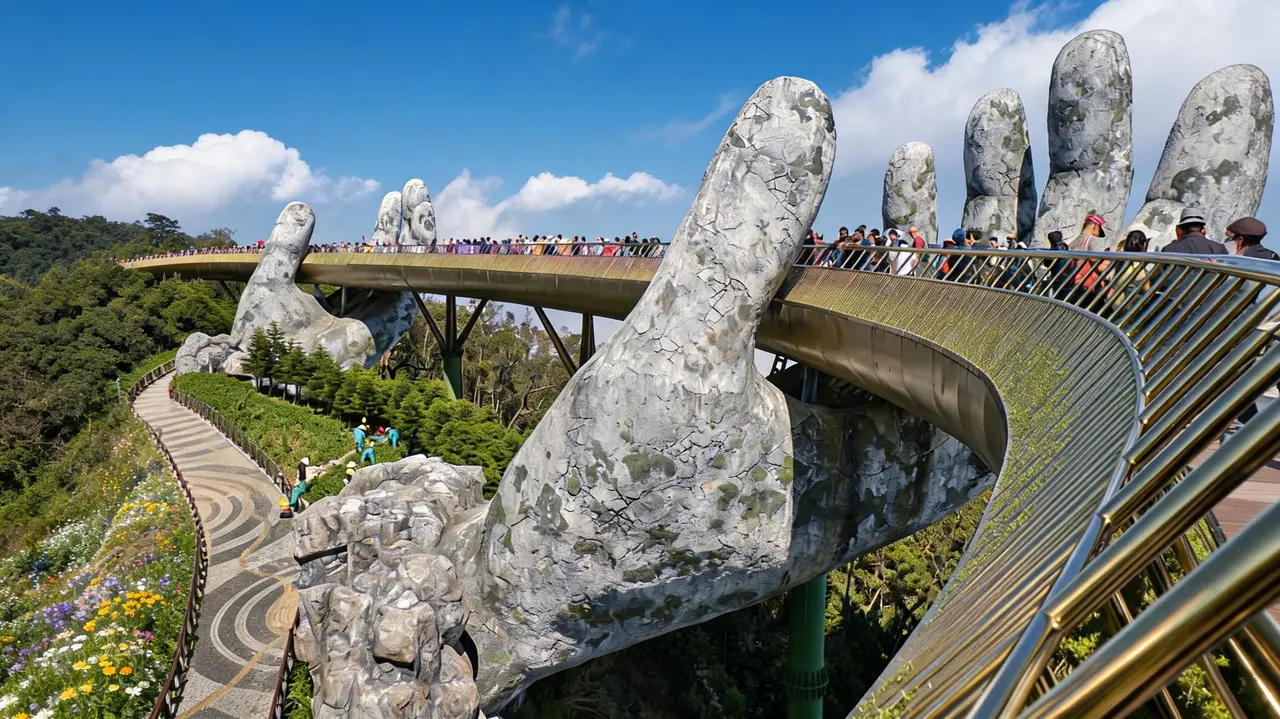
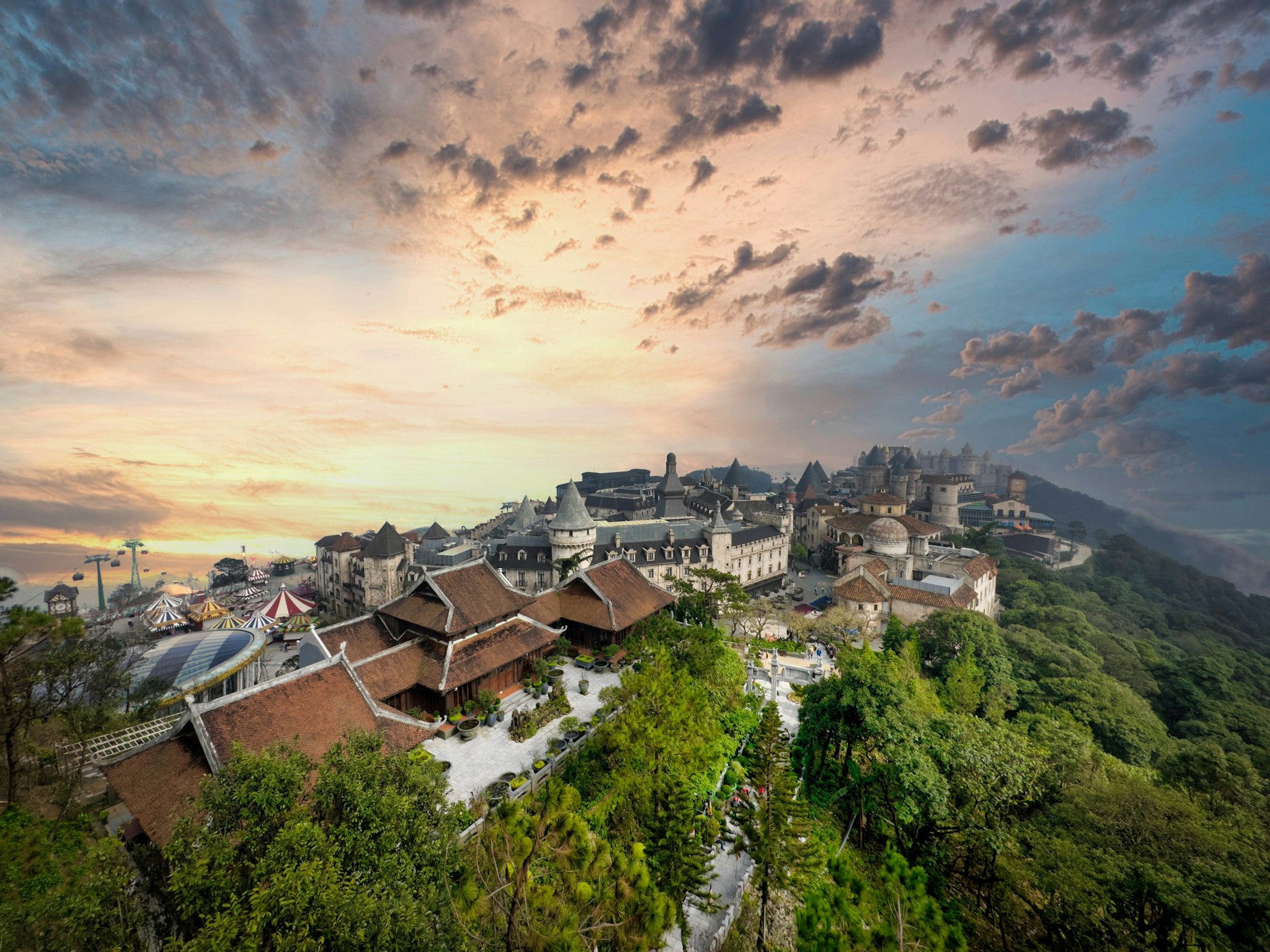
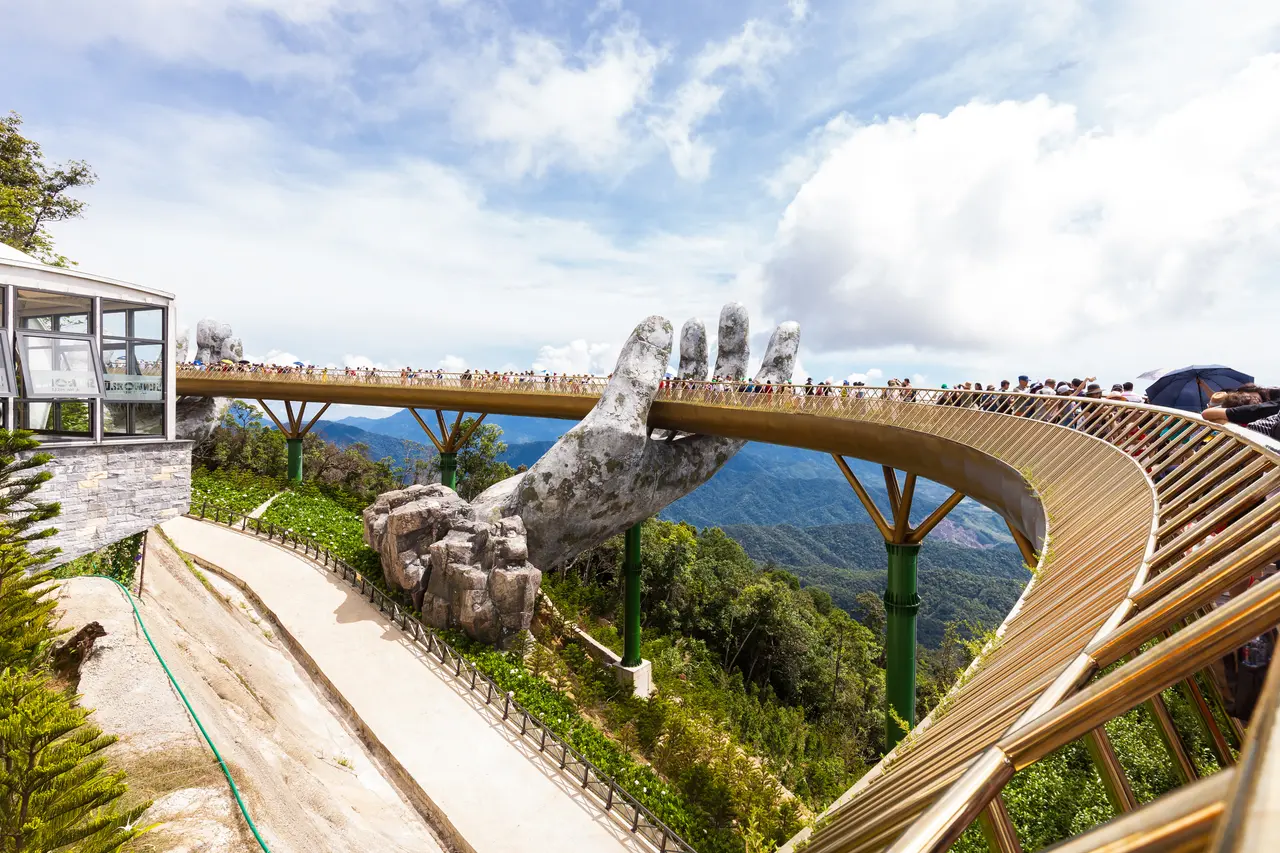
Sitting 1,500 meters above sea level, Ba Na Hills is a hilltop resort complex accessible via one of the world’s longest cable car rides. The Golden Bridge, held aloft by two giant stone hands, is the star attraction. Entrance costs 900,000-1,000,000 VND ($35-$40) for adults, including round-trip cable car and access to Fantasy Park with over 100 indoor games. Open daily from 7:00 AM to 9:30 PM. Visit on weekdays to avoid the heaviest domestic crowds. The mountain summit is approximately 20°C cooler than the city, so bring a light jacket.
Marble Mountains
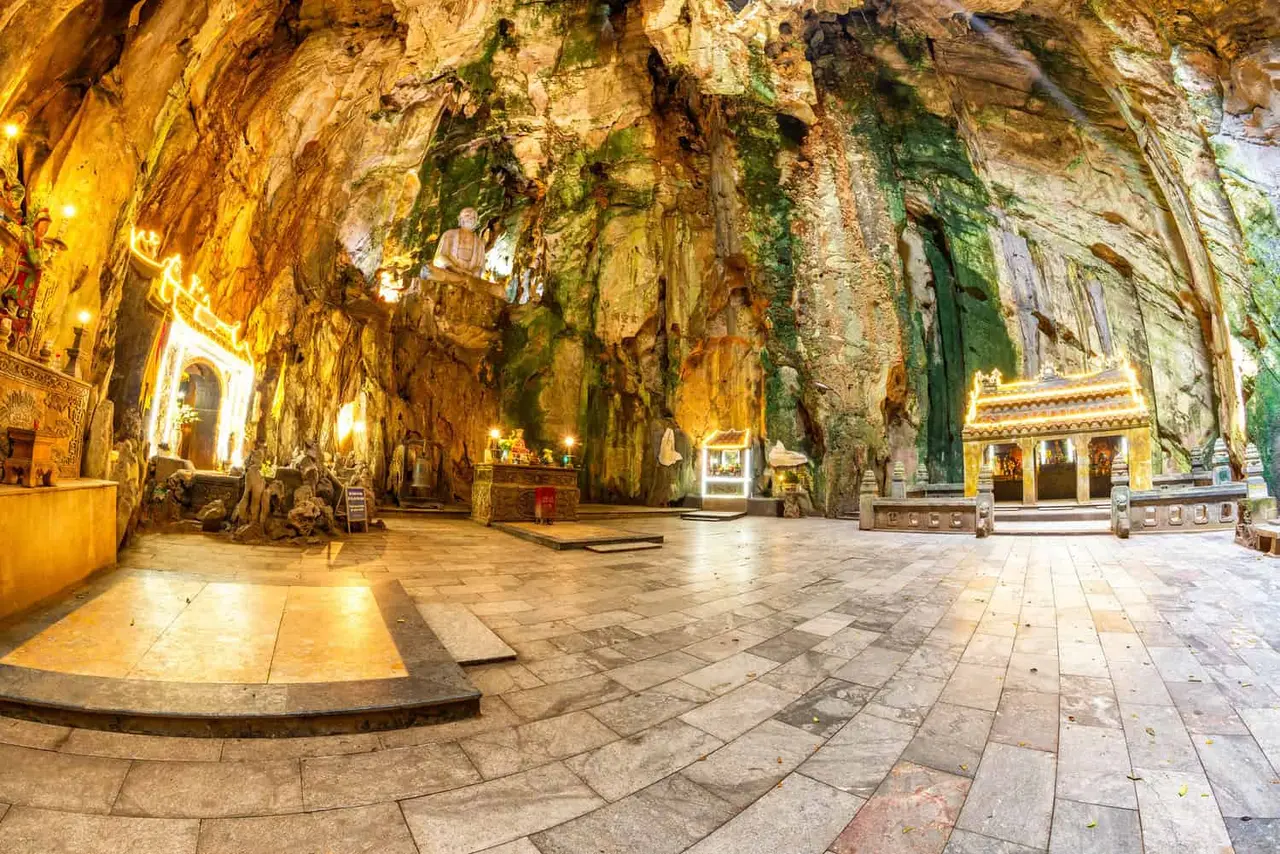
This cluster of five limestone and marble hills houses a network of caves, Buddhist pagodas, and stunning viewpoints. The entrance fee is just 40,000 VND ($1.60), with an optional elevator for 15,000 VND per ride. Allow 1 to 2.5 hours to explore Thuy Son (Water Mountain), the largest and most accessible peak. Wear sturdy shoes and visit early to beat both the heat and the tour groups. Address: 81 Huyen Tran Cong Chua, Hoa Hai Ward.
Son Tra Peninsula (Monkey Mountain)
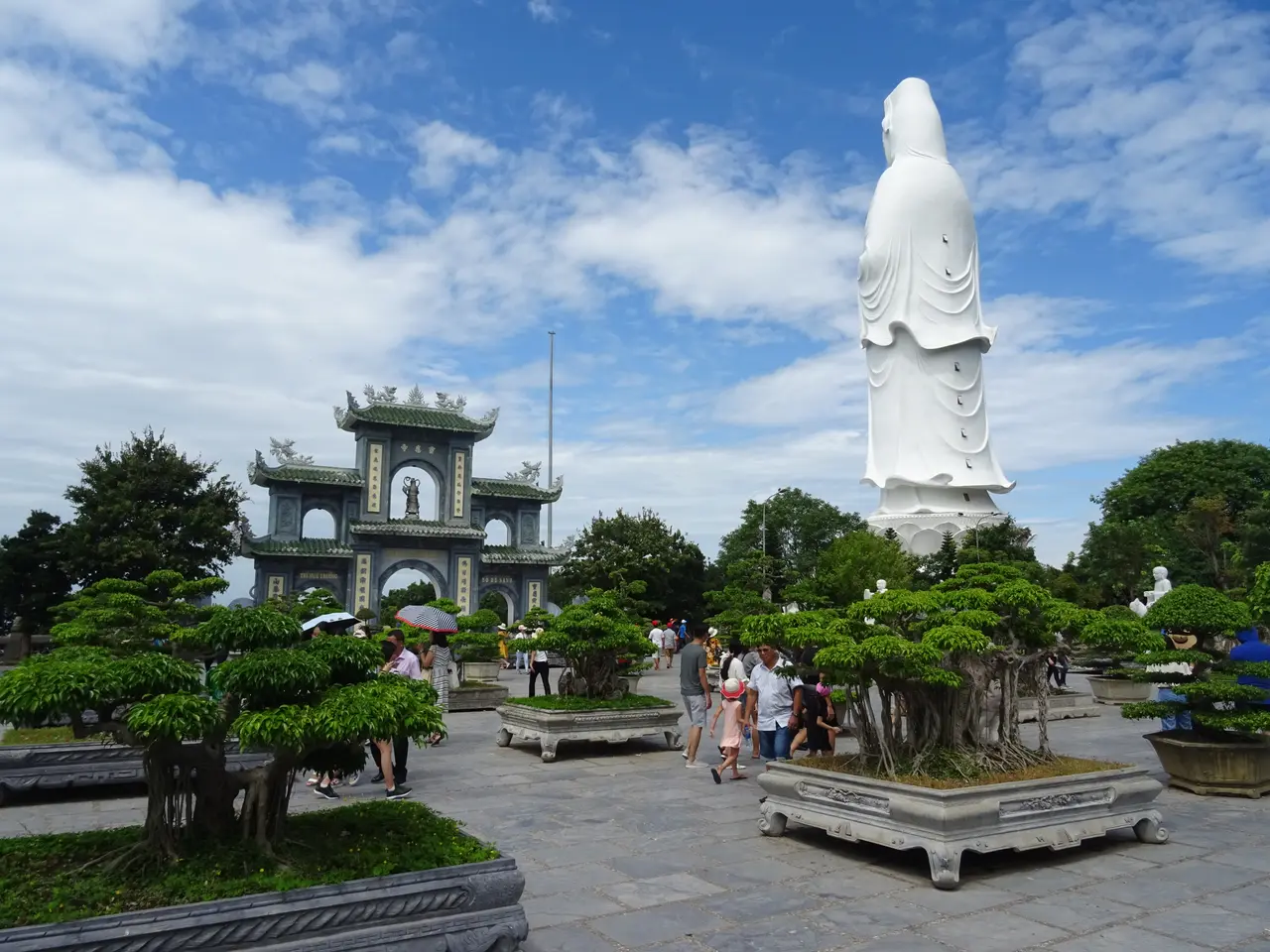
Son Tra is a 4,439-hectare nature reserve known locally as the “Green Lung of Da Nang.” The main attraction is Linh Ung Pagoda, home to the 67-meter-tall Lady Buddha statue, the tallest in Vietnam. Entry is free. Beyond the pagoda, the peninsula offers secluded beaches like Bai But and Ghenh Bang Cove, the Ban Co peak viewpoint with panoramic city views, and the chance to spot the critically endangered red-shanked douc langur, one of the most colorful primates on Earth. Visit at dawn (5:30-7:00 AM) for the best wildlife sightings.
Dragon Bridge
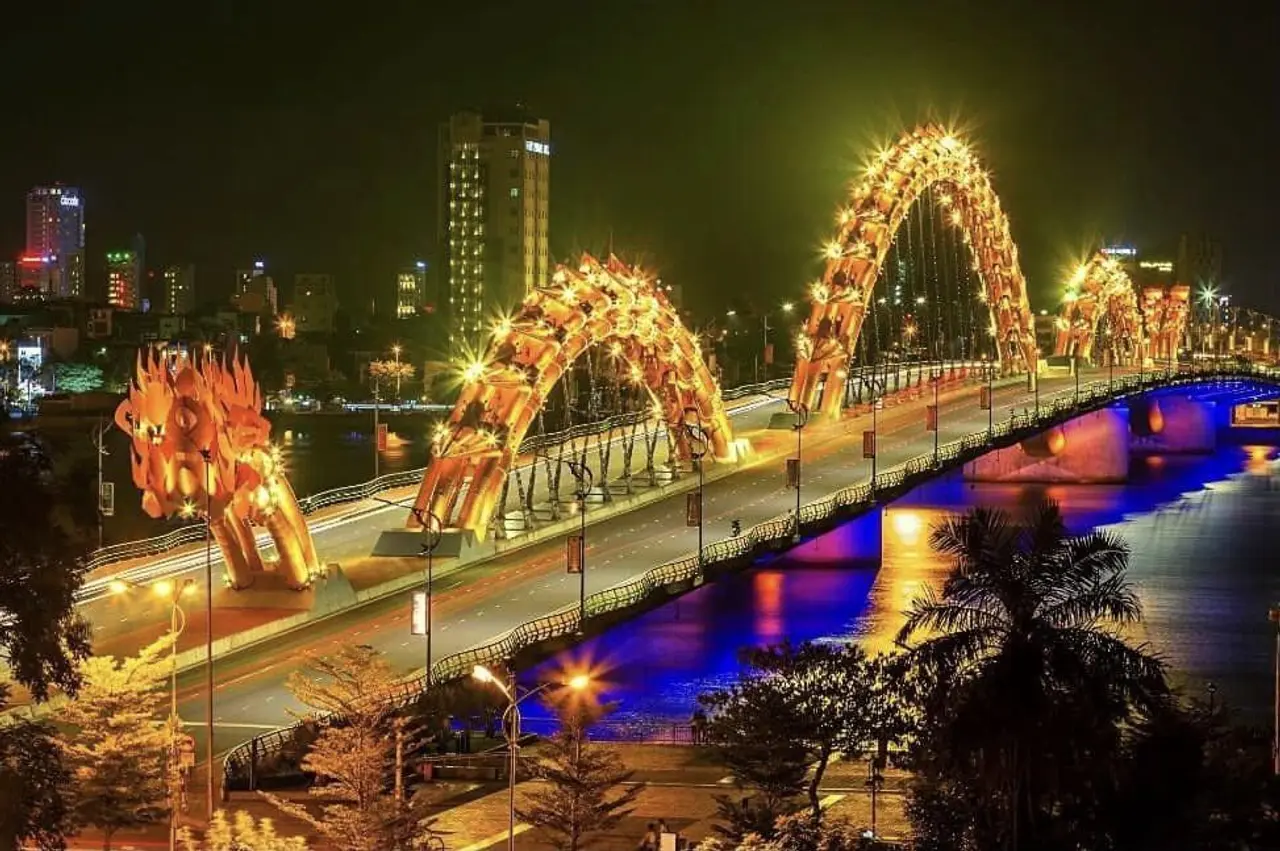
Da Nang’s most iconic landmark is a 666-meter steel dragon that stretches across the Han River. Every Saturday and Sunday at 9:00 PM, the dragon breathes fire and water in a spectacular free show. Arrive by 8:30 PM to secure a good viewing spot on Tran Hung Dao Street or the bridge itself. After the show, the riverside promenade comes alive with families, street vendors, and night markets.
Cham Museum
Established in 1919, the Da Nang Museum of Cham Sculpture houses the world’s largest collection of Cham artifacts, including two recognized national treasures from the Dong Duong monastery. The collection spans the 4th to 15th centuries and reflects the Hindu-influenced Champa civilization. Entrance is 60,000 VND ($2.40). Open 7:00 AM to 5:00 PM.
Da Nang Cathedral (Rooster Church)
Built in 1923 during the French colonial period, this pink Gothic church is one of the city’s most photogenic landmarks. Free to enter. Open 8:00-11:00 AM and 1:30-4:30 PM. Located at 156 Tran Phu Street.
Day Trips from Da Nang
Hoi An Ancient Town
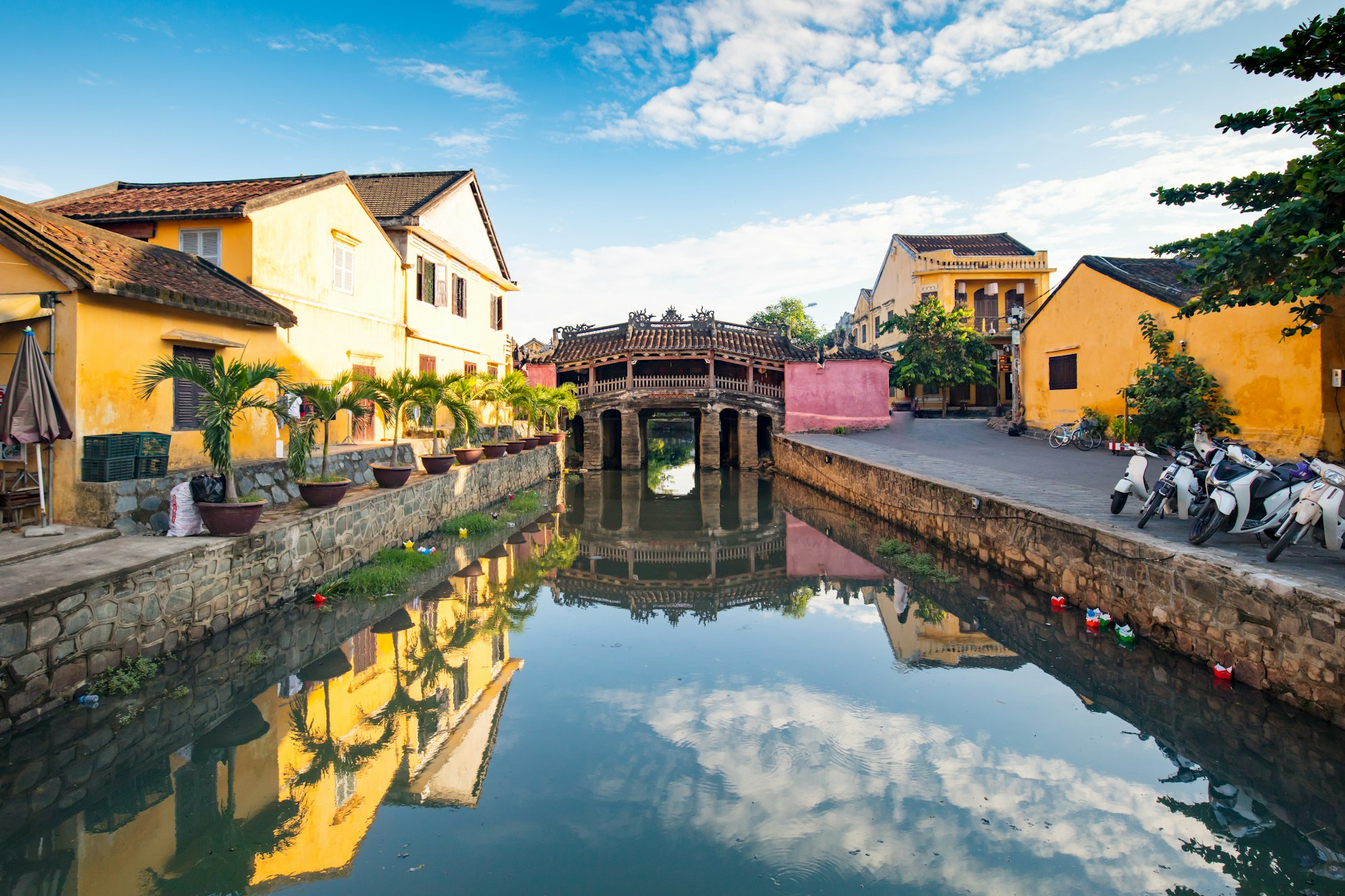
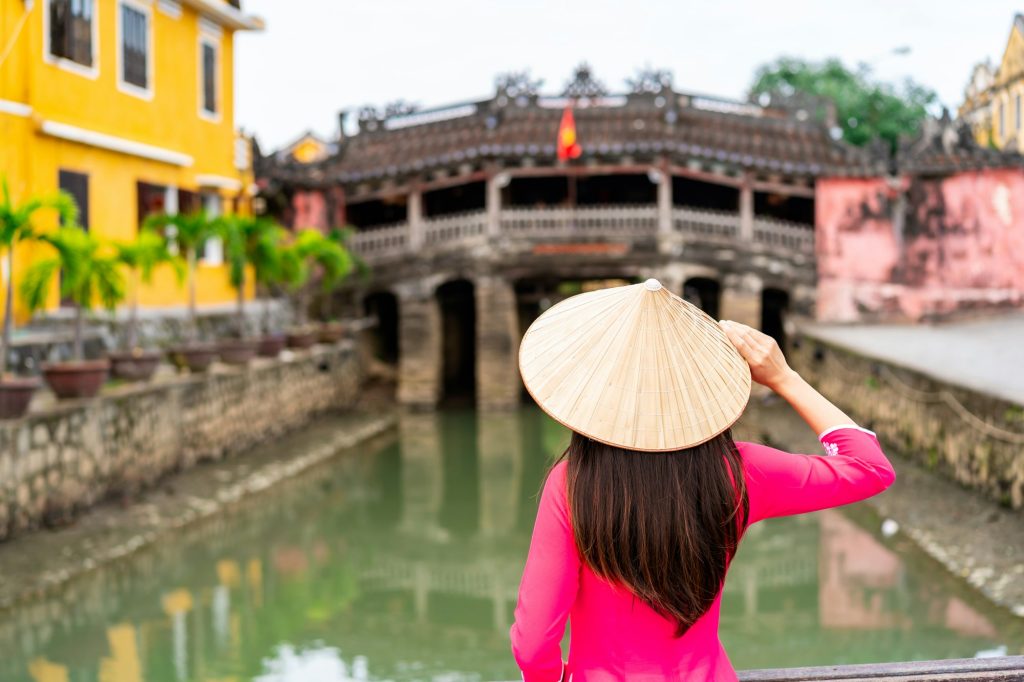
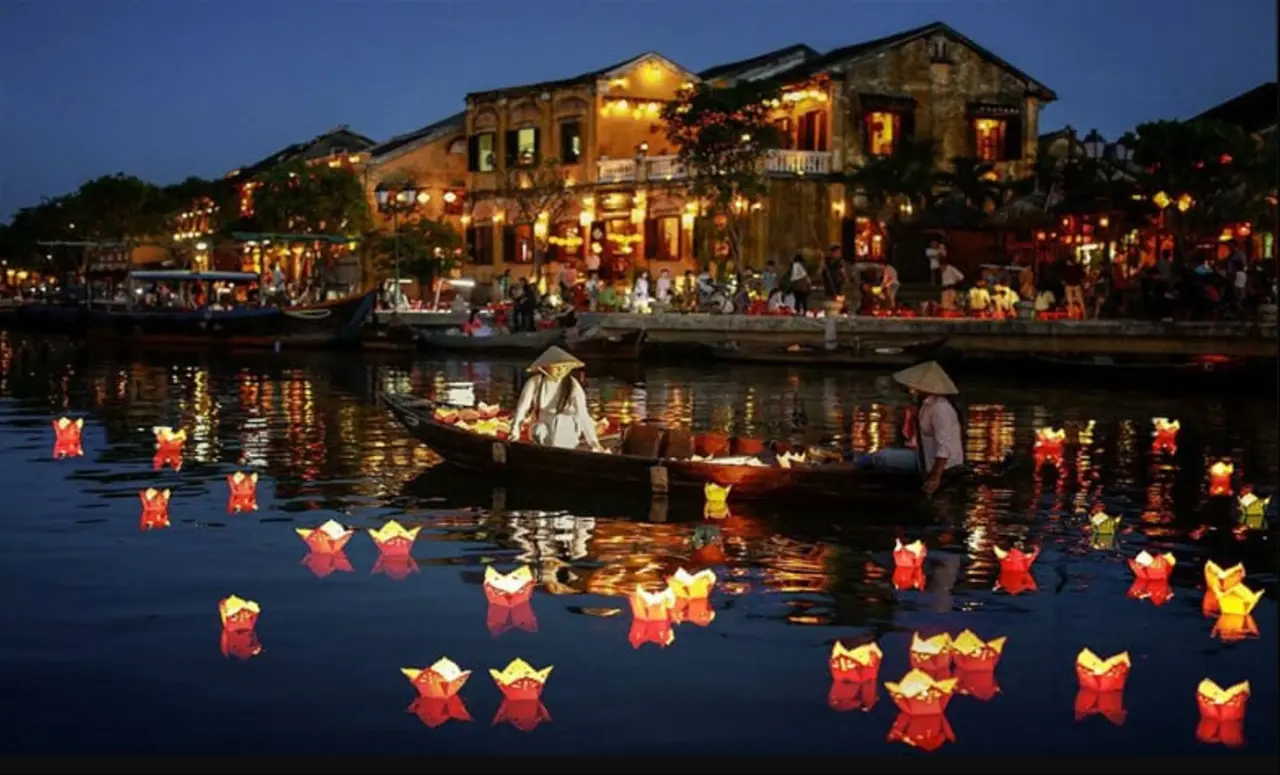
Just 30 kilometers south (45 minutes by car or Grab), Hoi An is a perfectly preserved 15th- to 19th-century trading port and a UNESCO World Heritage site. The Old Town entry ticket costs 120,000 VND ($5) and grants access to historic houses, assembly halls, and the iconic Japanese Covered Bridge. Spend the morning wandering the lantern-lit streets, get custom-tailored clothing made in 24 hours, and return for the evening when the river glows with floating lanterns.
Hue Imperial City
A 2-hour drive north via the legendary Hai Van Pass, Hue was Vietnam’s imperial capital under the Nguyen dynasty. The Citadel and the Forbidden Purple City are the main draws, with entrance at 150,000 VND ($6). The Hai Van Pass drive itself is an experience, with sweeping ocean views and mountaintop bunkers dating to the American War.
Hai Van Pass
This 21-kilometer mountain pass is one of Vietnam’s most scenic drives. It connects Da Nang to Lang Co Beach and Hue. The summit offers panoramic views of Da Nang Bay and the Annamite mountain range. Free to drive or ride. Best done by motorbike or hired car with a stop at the summit checkpoint.
My Son Sanctuary
A UNESCO World Heritage site 70 kilometers from Da Nang, My Son was the religious center of the Champa kingdom from the 4th to 13th centuries. The red-brick Hindu temple complex is often called “Vietnam’s Angkor Wat.” Entrance is approximately 150,000 VND ($6). Open 6:30 AM to 5:30 PM. Allow half a day for the round trip and exploration.
Da Nang Food Guide: What and Where to Eat
Da Nang’s food scene is a defining reason to visit. The city has more Michelin-recognized establishments than any other Vietnamese city outside Hanoi and Ho Chi Minh City, yet street food remains incredibly affordable and authentic.
Mi Quang: The Signature Dish
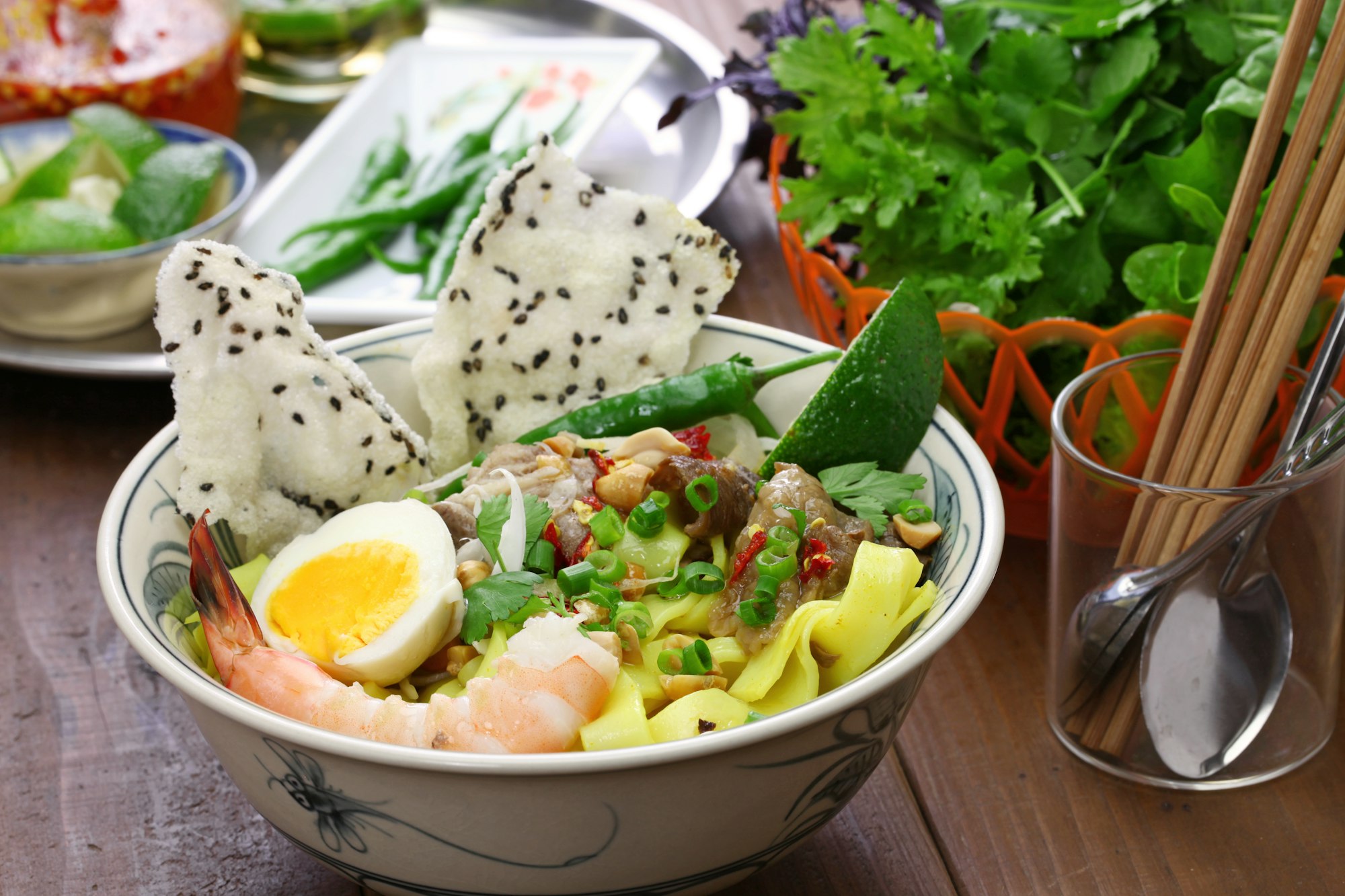
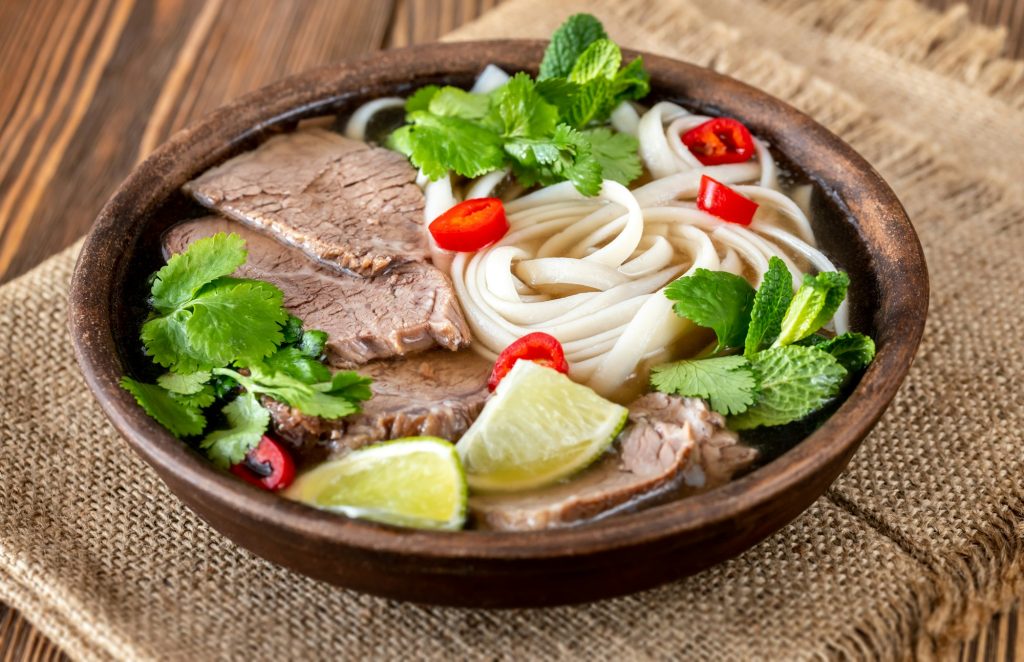
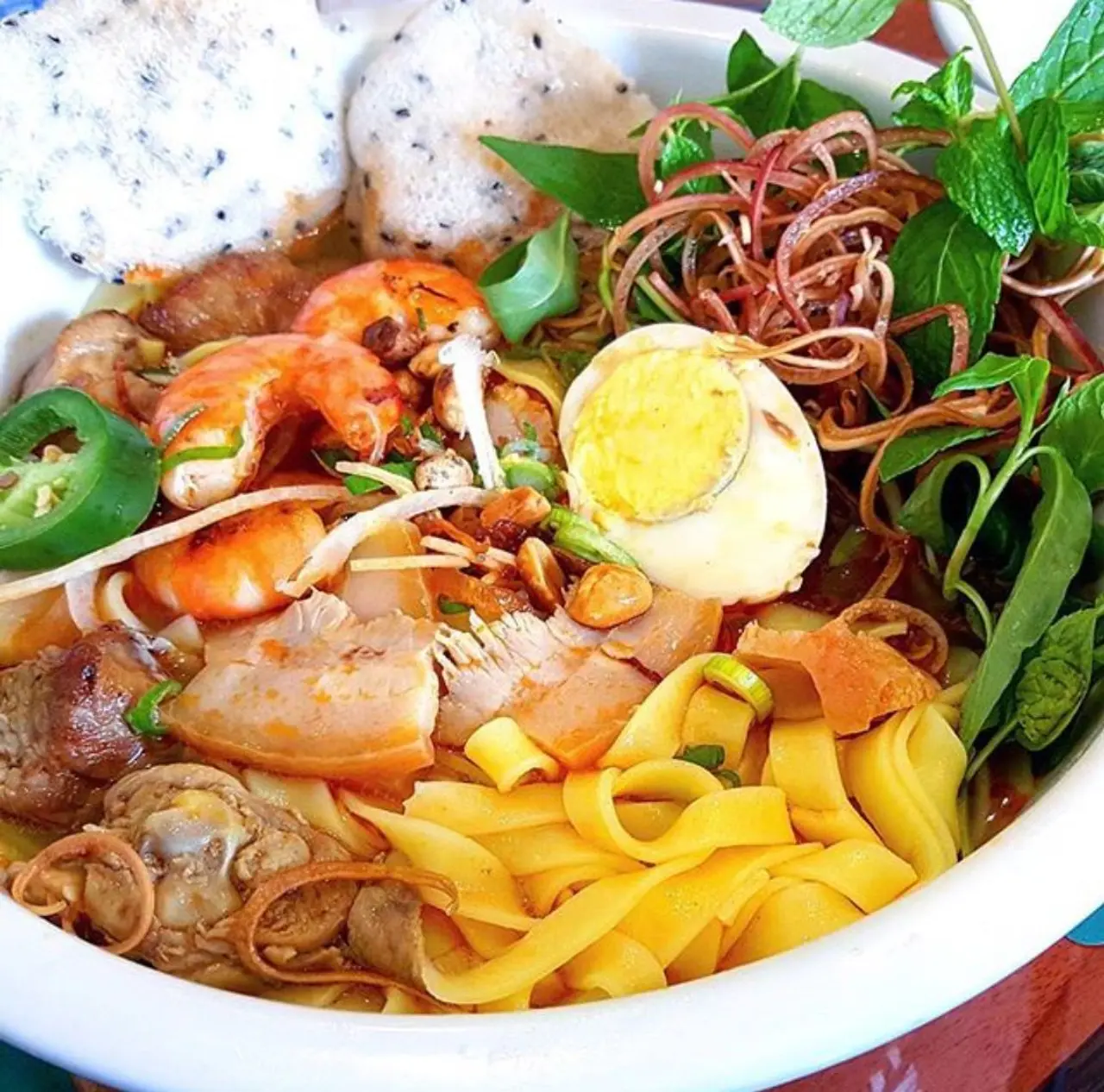
Mi Quang is turmeric-colored rice noodles served in a small amount of concentrated broth, topped with shrimp, pork belly, quail egg, roasted peanuts, and a crunchy sesame rice cracker. This is a wet noodle dish, not a soup. Expect to pay 30,000-50,000 VND ($1.20-$2.00). Go to Mi Quang 1A at 1 Hai Phong Street, Mi Quang Ba Mua at 19-21 Tran Binh Trong, or Mi Quang Hong Van at 59 Le Hong Phong, which earned a Bib Gourmand in 2024.
Banh Xeo: Crispy Central-Style Pancake
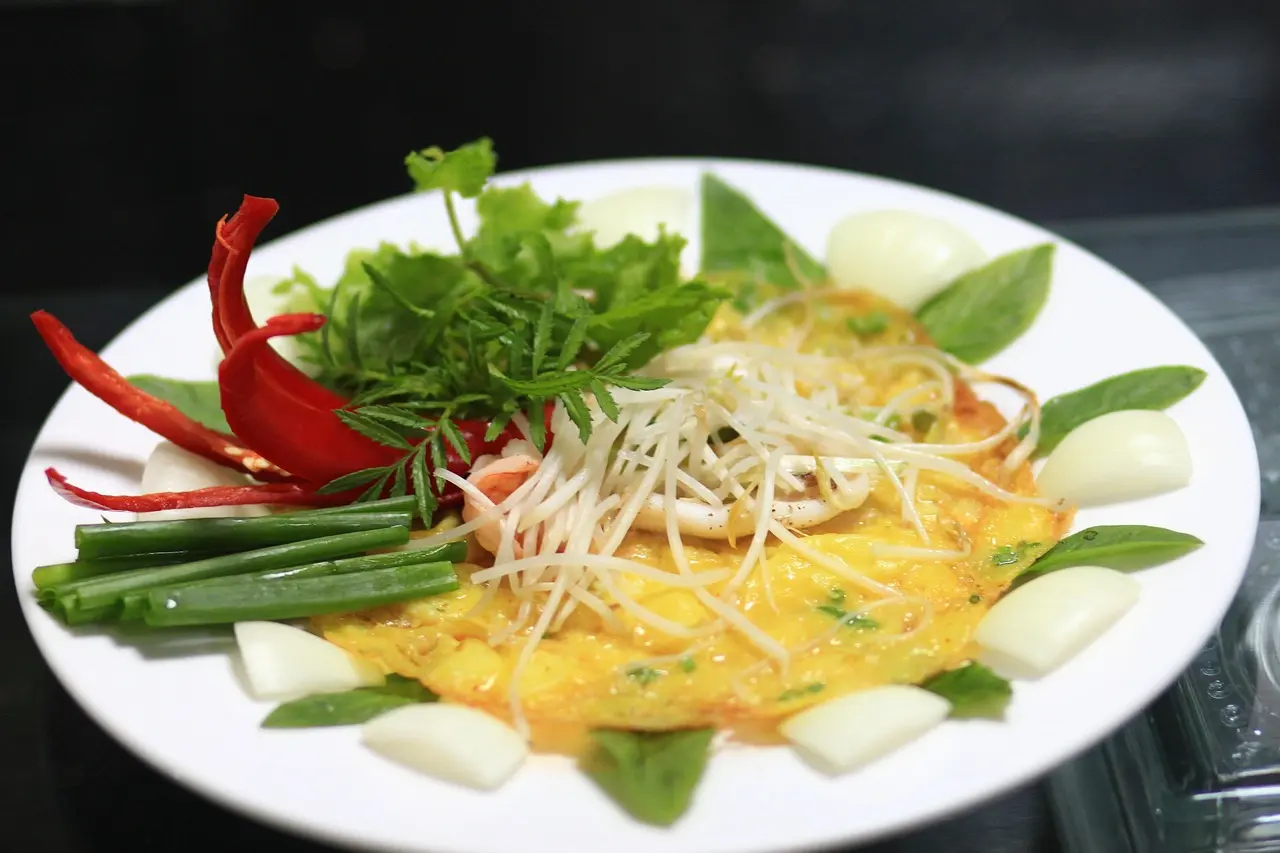
Da Nang’s version of banh xeo is smaller, crispier, and darker than its Saigon counterpart. The rice flour crepe is stuffed with pork, shrimp, and bean sprouts, fried until shatteringly crisp, and wrapped in rice paper with herbs and dipped in peanut-liver sauce. Banh Xeo Ba Duong at K280/23 Hoang Dieu is a 30-year institution and Michelin Selected. A set for sharing costs approximately 80,000 VND ($3.20).
Bun Cha Ca: Fish Cake Noodle Soup
A Da Nang breakfast staple. The broth is sweet and slightly sour, made with pumpkin and pineapple, and served with tender fish cakes. Find it at Bun Cha Ca 109 or Bun Cha Ca Ba Lu for 30,000-45,000 VND ($1.20-$1.80). Go before 9:30 AM, the broth often sells out by mid-morning.
Seafood
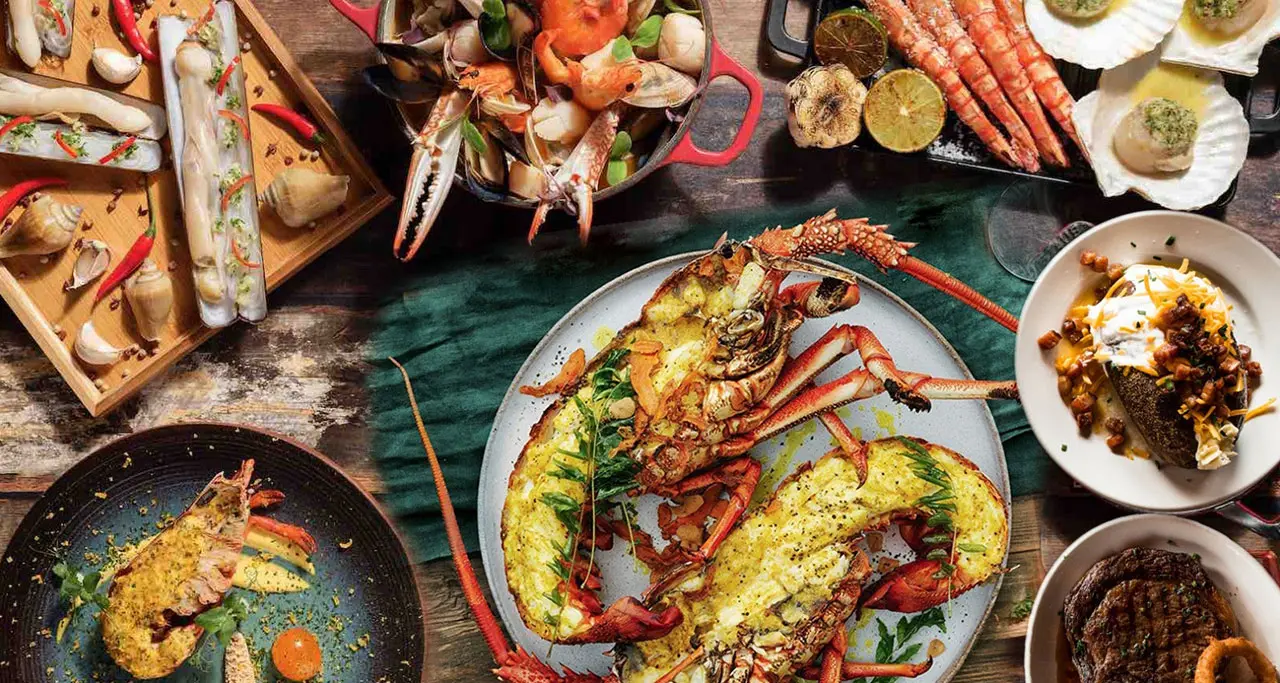
The beachfront seafood strip along Vo Nguyen Giap Street is lively but notoriously overpriced. Know the fair market prices: tiger prawns 600,000-800,000 VND per kg, clams approximately 150,000 VND per kg. For a local experience, try Nam Danh Seafood tucked away at 139/59/38 Tran Quang Khai, or the Michelin Selected Hai San Be Man and My Hanh Seafood.
Street Food Timing: An Insider Secret
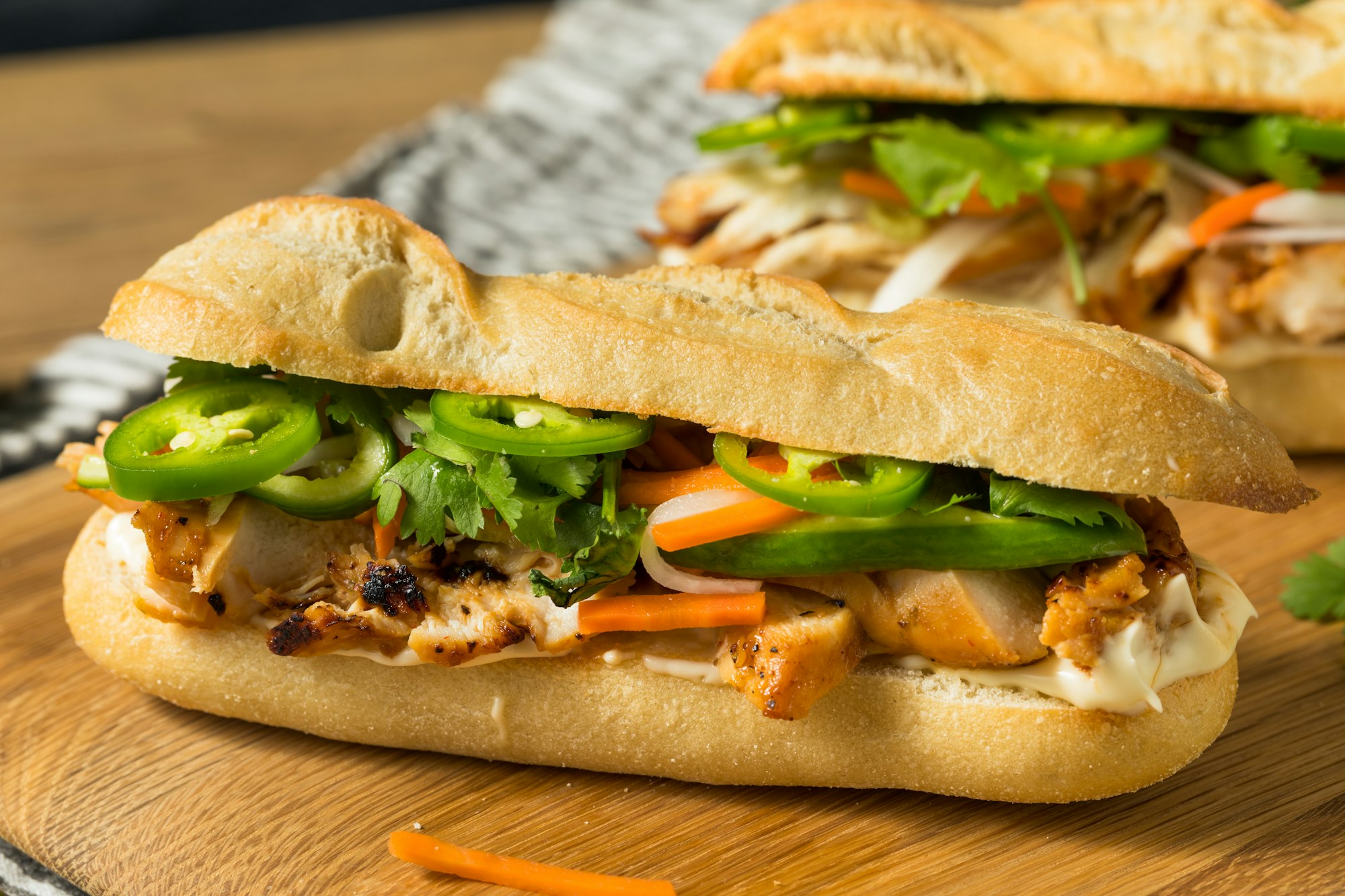
Street food in Da Nang operates on a strict schedule that most guidebooks miss. Breakfast stalls serve soup dishes like pho and bun cha ca from 6:00 to 9:00 AM. From 9:30 to 10:30 AM, stalls close for cleaning. Lunch runs 11:00 AM to 1:30 PM with com binh dan (rice buffets) where you point at dishes for approximately 35,000 VND. The dead zone runs 2:00 to 5:00 PM when most street stalls are closed. Only tourist restaurants and cafes are open. This is the perfect time for banh mi from a street cart or Vietnamese iced coffee. Dinner comes alive from 6:00 PM.
Michelin-Recognized Restaurants
For a splurge, La Maison 1888 at the InterContinental holds one Michelin star with French fine dining from $100 per person. Nen Danang holds a Green Star for sustainability, serving modern Vietnamese at approximately $60 per person. Mi Quang Que Xua earned a Bib Gourmand in 2025 for its $1.80 bowls.
Suggested Itineraries
1 Day in Da Nang
Start at sunrise on My Khe Beach (6:00-8:00 AM). Head to Marble Mountains for cave exploration and panoramic views (8:00-11:00 AM). Lunch on Mi Quang. Afternoon at Son Tra Peninsula, visiting Linh Ung Pagoda and the Lady Buddha statue (1:00-4:00 PM). Evening seafood dinner followed by the Dragon Bridge fire show at 9:00 PM if it is a weekend.
3 Days in Da Nang
Day 1: Beach and city. Morning at My Khe Beach. Afternoon at Cham Museum and Da Nang Cathedral. Evening riverside dinner and Dragon Bridge.
Day 2: Nature and mountains. Early morning at Son Tra Peninsula for wildlife spotting. Afternoon at Marble Mountains. Evening at Son Tra Night Market.
Day 3: Ba Na Hills and Golden Bridge. Full day at the hilltop resort, returning in time for sunset. Alternative: Day trip to Hoi An Old Town.
5 Days in Da Nang
Day 1: Arrival, My Khe Beach, Dragon Bridge evening.
Day 2: Ba Na Hills and Golden Bridge (full day).
Day 3: Son Tra Peninsula, Marble Mountains, seafood dinner.
Day 4: Day trip to Hoi An Ancient Town (tailoring, lanterns, Old Town).
Day 5: Hai Van Pass drive to Lang Co Beach, Han Market souvenir shopping, departure.
Where to Stay in Da Nang
My Khe Beach and My An (Best for Tourists)
This is where most visitors base themselves. The An Thuong neighborhood in My An is the epicenter of expat and tourist life, packed with Western restaurants, cafes, and boutique hotels. Budget hostels from $6 per night, mid-range hotels from $20, and beachfront resorts from $120.
Hai Chau / City Center (Best for City Vibes)
The downtown area around the Han River and Dragon Bridge offers easy access to attractions, shopping at Han Market, and riverside dining. More affordable than the beachfront, with 3-star hotels from $20-$80 per night.
Non Nuoc Beach (Best for Luxury Resorts)
South of the city near Marble Mountains, this stretch is home to high-end resorts like Furama, Pullman, and Hyatt Regency. Expect to pay $120 to $400+ per night for 5-star properties.
Son Tra Peninsula (Best for Tranquility)
The InterContinental Danang Sun Peninsula Resort sits on its own private cove on Son Tra, with rates from $300 to over $1,000 per night. Worth it for the experience and solitude.
Da Nang Travel Budget 2026
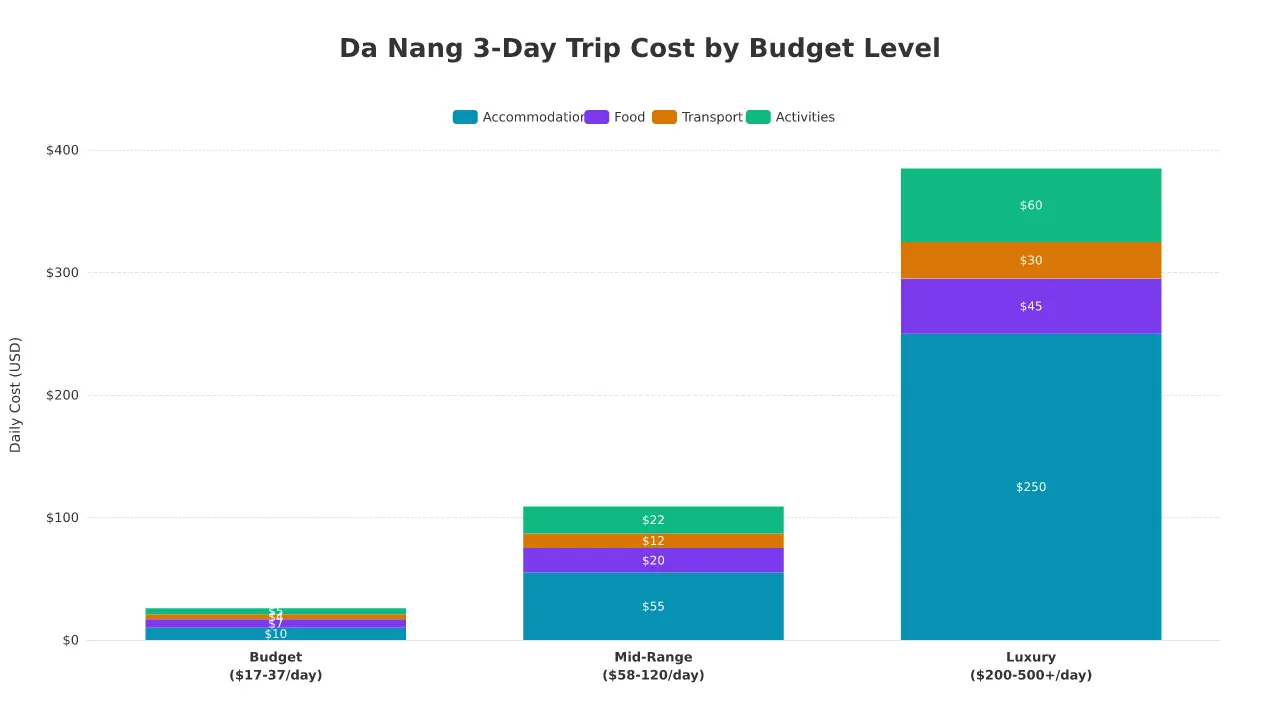
| Expense Category | Budget ($/day) | Mid-Range ($/day) | Luxury ($/day) |
|---|---|---|---|
| Accommodation | $6-$15 | $35-$80 | $150-$400+ |
| Food | $5-$9 | $15-$25 | $30-$60 |
| Local Transport | $3-$5 | $8-$15 | $20-$40 |
| Activities | $3-$8 | $15-$30 | $40-$80 |
| Total | $17-$37 | $58-$120 | $200-$500+ |
Total trip cost for 3 days and 2 nights excluding flights: Budget travelers spend $42-$78, mid-range $174-$360, and luxury $600-$1,500.
Cost Comparison With Other Destinations
Da Nang’s average daily cost of $56 makes it significantly cheaper than Phuket ($132) and Bali ($86). The gap is even wider for families, who benefit from affordable accommodation, cheap street food, and low-cost transportation. With a safety score of 88/100 compared to Phuket’s 74, Da Nang offers better value and greater peace of mind.
Da Nang Nightlife
The Dragon Bridge fire show (weekends at 9:00 PM) is the centerpiece of Da Nang nightlife, drawing crowds to the Han River banks. For a drink afterward, Ket High Cocktail Bar offers rooftop views, Apocalypse Beach Club brings the party to the sand, and ADM Club is the city’s largest nightclub. More relaxed options include OQ Lounge for chill vibes and The Gypsy at the New Orient Hotel for sunset cocktails. Night markets include Son Tra Night Market for beachfront grilled seafood skewers and Helio Night Market for hundreds of food and craft stalls.
Practical Tips for Da Nang
Visa Requirements
Citizens of the UK, Germany, France, Italy, Spain, Denmark, Sweden, Norway, Finland, Russia, Japan, and South Korea enjoy visa-free entry for up to 45 days. ASEAN neighbors get 30 days. All other nationalities can apply for a 90-day e-visa ($25) at evisa.gov.vn, valid for single or multiple entries. Process in 3-5 working days. Your passport must be valid for at least 6 months beyond your entry date.
Money and Currency
The Vietnamese Dong (VND) trades at approximately 25,500 VND to $1 USD. Gold and jewelry shops offer the best exchange rates; avoid airport counters. ATMs are widespread but charge 22,000-33,000 VND per withdrawal. Street food and markets are cash-only. Major hotels and restaurants accept cards. Always carry small bills (10,000-50,000 VND) for taxis, street food, and tips.
SIM Cards and eSIM
Viettel offers the best coverage. Buy a physical SIM at airport kiosks for $5-$8 for 30 days, or download an Airalo eSIM before departure for $5-$10 for 7 days. Internet speeds in Da Nang average 85 Mbps download, significantly higher than the regional average.
Safety Tips
Da Nang is one of Southeast Asia’s safest cities. Use Grab or Xanh SM instead of unmarked taxis. Keep bags cross-body on the side away from traffic. Walk confidently at a steady pace when crossing streets. Avoid posting real-time location tags on social media. Emergency numbers: Police 113, Fire 114, Ambulance 115.
What to Pack
February to May: Lightweight clothing, a light jacket for evenings, swimwear, SPF 50+ sunscreen, comfortable walking shoes, hat, and sunglasses. June to August: Add quick-dry clothing, a portable fan, and electrolyte packets. September to January: Pack a lightweight raincoat, water-resistant footwear, a compact umbrella, and a waterproof phone case. Year-round essentials: insect repellent, universal power adapter (Type A, C, F), reusable water bottle, rehydration salts, and photocopies of your passport.
Useful Vietnamese Phrases
Xin chao (sin chow) - Hello. Cam on (cam un) - Thank you. Bao nhieu? (bao nyew?) - How much? Khong cay (khom khay) - Not spicy. Tinh tien (tin tee-an) - Check please. Mot, hai, ba (mote, hi, ba) - One, two, three. Grab di (dip) - Take me there (show the driver).
FAQ About Da Nang Travel
What is Da Nang famous for?
Da Nang is famous for its 30-kilometer stretch of sandy beaches, especially My Khe Beach. The Golden Bridge held by giant stone hands at Ba Na Hills, the fire-breathing Dragon Bridge, and the Marble Mountains are iconic attractions. The city is also the gateway to three UNESCO sites including Hoi An.
How many days in Da Nang is enough?
Three days is the ideal minimum for a first visit. This allows one day for city and beach, one day for Ba Na Hills or the Marble Mountains and Son Tra Peninsula, and one day for a day trip to Hoi An. Five days gives you a more relaxed pace.
Is Da Nang expensive for tourists?
No. Da Nang is one of Southeast Asia’s most affordable beach destinations. Budget travelers can manage on $25-$45 per day, mid-range travelers on $70-$120, and even luxury travelers find exceptional value compared to Phuket or Bali where costs are 53-136% higher.
What is the best month to visit Da Nang?
March and April offer the best combination of weather, crowds, and value for visitors. Temperatures hover around 25-30°C, rain is minimal, and the sea is calm for swimming. February to May is the ideal window for most travelers seeking sunshine, comfortable conditions, and manageable tourist numbers.
What food is Da Nang known for?
Da Nang’s signature dish is Mi Quang, turmeric noodles with pork, shrimp, and roasted peanuts. Banh Xeo crispy pancakes served with fresh herbs, Bun Cha Ca fish cake noodle soup, and fresh seafood are also essential local experiences. The city has multiple Michelin Bib Gourmand and Selected restaurants worth exploring.
How do I get from Da Nang to Hoi An?
The easiest way is by GrabCar, which costs approximately 250,000-350,000 VND ($10-$14) for the 30-kilometer, 45-minute trip. Alternatively, book a private transfer for $12-$20 or take a local bus for under $2. Motorbike rental is a fun, flexible option for confident riders following the scenic coastal road.
Is Da Nang safe for solo female travelers?
Yes. Da Nang scores 88 out of 100 on global safety indexes with virtually no violent crime against tourists. Use Grab or Xanh SM for reliable transport, avoid unlit alleys late at night, and keep bags secured on the side away from traffic. Solo female travelers consistently rate Da Nang among the safest destinations in Southeast Asia.
Conclusion
Da Nang is not just a stopover between Hoi An and Hue. It is a destination in its own right, offering world-class beaches, extraordinary food, rich history, and modern infrastructure at a fraction of the cost of comparable destinations. Whether you are chasing the perfect wave at My Khe Beach, standing in awe beneath the Golden Bridge, or slurping Mi Quang at a street stall as the Dragon Bridge glows in the distance, Da Nang leaves an impression that lingers long after you leave.
The numbers speak for themselves: 17 million visitors in 2025, a safety score of 88 out of 100, average daily costs of $56, and a development pipeline worth over $2 billion. But the real magic is in the details - the taste of a freshly fried banh xeo, the chill of a Vietnamese iced coffee during the afternoon dead zone, and the warmth of a city that welcomes everyone from backpackers to billionaires.
Plan your trip. Pack your bags. Da Nang is waiting.
Have you visited Da Nang? Share your experience in the comments below. For more Vietnam travel inspiration, check out our guide to Hoi An travel guide and Vietnam itinerary planner. Also read our Da Lat travel guide for another incredible Vietnamese destination.
Planning a trip to Vietnam? Read our complete Vietnam travel guide or discover 10 cheapest beach destinations in Asia for more budget-friendly inspiration.